
- As the Gangwon Superintendent Election Approaches, Korea Must Reconsider the Meaning of Teachers and Educational Leadership
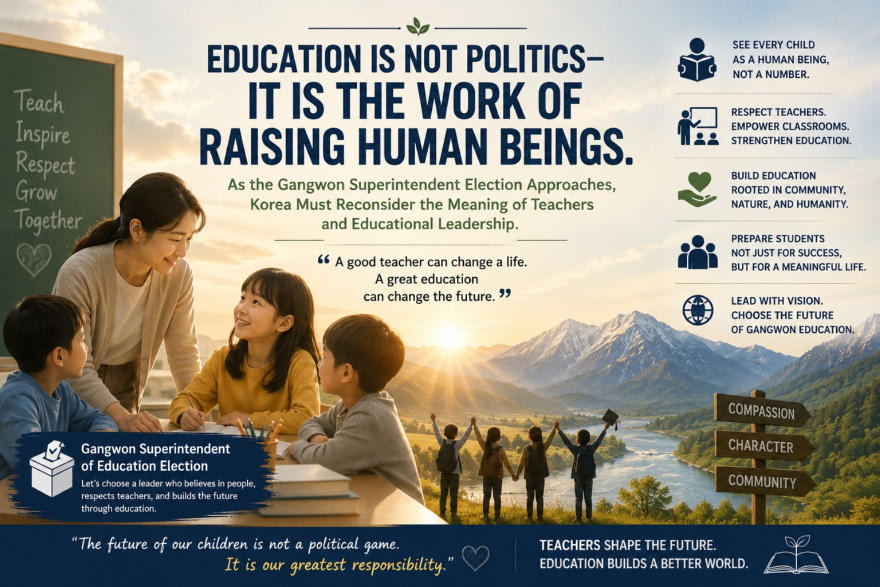
Every May, South Korea celebrates Teachers’ Day with carnations, handwritten letters, and expressions of gratitude.
Yet behind the ceremonies lies a deeper and more urgent question:
What kind of education do we truly want for the next generation?
This year marks the 45th anniversary of Teachers’ Day as an official national observance. Over those decades, Korean education has achieved remarkable academic success, producing world-class literacy rates and globally competitive students. But amid that success, another reality has quietly emerged — exhausted teachers, anxious parents, emotionally overwhelmed students, and classrooms increasingly dominated by competition rather than humanity.
The upcoming Gangwon Superintendent of Education election is therefore more than a local political contest.
It is a moral and philosophical test for the future of education itself.
A Teacher Is More Than a Deliverer of Knowledge
The greatest teachers are rarely remembered for test scores or rankings.
They are remembered because they changed lives.
Students may forget formulas, dates, or examination results, but they never forget the teacher who believed in them when no one else did. A true educator does not merely transfer information; a true educator awakens dignity, courage, curiosity, and hope.
The Greek philosopher Socrates once described education not as the filling of a vessel, but as “the kindling of a flame.”
Similarly, Confucius emphasized that learning should cultivate character and joy, not merely achievement.
Education, at its core, is the formation of human beings.
Yet modern education systems increasingly measure children like products — through grades, rankings, statistics, and performance indicators. In such an environment, students become numbers, teachers become administrators, and schools risk losing their moral soul.
The Crisis Facing Education Today
South Korea’s educational pressure has become legendary around the world.
Children spend endless hours preparing for examinations, while teachers struggle under growing administrative burdens and declining authority in classrooms.
The tragedy is not simply academic stress.
The deeper tragedy is that many young people are losing their sense of purpose, emotional resilience, and belief in themselves.
Schools have become technologically advanced, yet emotionally fragile.
This is why leadership matters.
The role of a superintendent is not merely to manage budgets or announce policies.
A superintendent determines the moral direction of an entire educational culture.
And nowhere is this more important than in Gangwon Province — a region balancing urban development, rural decline, demographic change, technological transition, and widening educational inequality.
The next educational leader of Gangwon must therefore offer more than slogans.
They must offer philosophy.
What Makes a True Educational Leader?
First: Seeing Children as Human Beings, Not Statistics
A true educational leader understands that education is not a factory producing examination results.
Every child carries different abilities, fears, dreams, and emotional struggles. Some students move quickly; others need time, patience, and compassion. The purpose of education is not to abandon the vulnerable in pursuit of averages, but to ensure that no child is treated as disposable.
The measure of a civilization is how it treats those who struggle the most.
Second: Respecting Teachers
No education reform can succeed if teachers themselves are broken.
Teachers are not machines designed to satisfy political demands or bureaucratic paperwork. They are mentors, guardians, counselors, and moral guides for society’s future generation.
A meaningful superintendent must reduce unnecessary administrative burdens and restore dignity to the teaching profession. Without respected teachers, there can be no healthy classrooms.
Educational leadership begins with trust.
Third: Building Education Rooted in Community and Humanity
Gangwon should not simply imitate Seoul.
The province possesses unique cultural and natural strengths — mountains, oceans, villages, historical identity, and strong local communities. Education in Gangwon should cultivate students who not only compete globally, but also understand responsibility, empathy, environmental awareness, and community values.
Artificial intelligence and future technologies matter.
But humanity matters more.
The ultimate goal of education is not merely economic productivity.
It is the creation of thoughtful, ethical, resilient human beings.
Education Must Rise Above Politics
Perhaps the greatest danger facing modern education is political tribalism.
When education becomes a battlefield for ideological conflict, children suffer first. Schools should not become instruments of political vanity or election marketing. Educational leadership requires humility, moral clarity, and long-term vision.
A superintendent must ask not,
“How do I win the next election?”
but rather,
“What kind of society will today’s children inherit twenty years from now?”
That is the difference between politics and statesmanship.
Teachers Shape the Future More Than Politicians Ever Will
A politician may influence society for a few years.
A teacher influences generations.
One compassionate teacher can rescue a student from despair. One principled educator can change the direction of an entire community. And one visionary educational leader can restore hope to a struggling system.
As Korea reflects on the 45th anniversary of Teachers’ Day, the Gangwon superintendent election should become more than a campaign season.
It should become a national conversation about the meaning of education itself.
Because in the end, education is not about power.
It is not about ideology.
It is not about political theater.
Education is the sacred work of raising human beings.
- TeachersDay
- TeachersDay45thAnniversary
- EducationLeadership
- GangwonEducation
- SuperintendentElection
- TrueEducation
- EducationalPhilosophy
- RespectTeachers
- FutureOfEducation
- HumanCenteredEducation
- EducationMatters
- MoralLeadership
- StudentsFirst
- EducationNotPol
BEST 뉴스
-

[지형덕칼럼] 동해 AI데이터센터, 규모보다 수요와 효율을 증명해야 한다
AI 연산 효율을 높이는 기술 등장…동해시와 GS는 단계별 수요·전력 사용·지역 혜택을 함께 설명해야 한다 Emerging technologies aim to improve AI computing efficiency. Donghae and GS should explain phased demand, power requirements and tangible local benefits. AI데이터센터의 경쟁력을 설명할 때... -
[지형덕칼럼] 동해시장, AI데이터센터의 ‘규모’보다 ‘실익’을 증명하라
GS의 냉각기술 개발과 도의회의 상생 요구가 던지는 질문…전력·물·고용·지역기업 참여를 검증 가능한 계획으로 제시해야 한다 GS’s cooling technology initiative and provincial calls for community benefits demand verifiable plans for power, water, employment and local business participation. 동... -
동해 AI데이터센터, 전기는 어디서 오나…화력발전 연계 계획 설명 필요
동해 AI데이터센터 캠퍼스의 전력공급과 관련해 화력발전소 연계 계획의 구체적인 내용과 지역 환경에 미칠 영향을 설명할 필요가 제기된다. 대규모 전력 확보 여부와 함께 어떤 발전원에서 전기를 조달하고, 기존 발전소 운영에 어떤 변화가 생기는지 시민이 확인할 수 있어야 한다는 취... -
[기자의눈]동해 AI데이터센터, 시민의 알권리에서 상생을 시작하자
전력·물·생활환경과 지역 일자리에 대한 충분한 설명이 신뢰의 출발점…동해시와 GS가 사업 초기부터 공개하고 소통하는 체계를 마련해야 Clear information on power, water, living conditions and local jobs is essential to trust. Donghae and GS should establish transparent communication from the outs... -
동해 AI데이터센터, 주민의 ‘열섬·농작물 피해’ 우려에 자료로 답해야
시사K뉴스|지형덕 기자 동해 AI데이터센터 주변 주민들이 걱정하는 문제 가운데 하나는 열이다. 기존 산업시설이 들어선 지역에 대규모 데이터센터까지 가동되면 여름철 생활환경과 인근 농작물에 부담이 더해지는 것 아니냐는 우려다. 주민설명회에서는 인근 포도농원의 피해를 호소하며 데이터센터 조성 이후 ... -
[지형덕칼럼] 강릉 AIDC 논란의 교훈…동해시장, 상생에도 ‘패스트트랙’을 적용하라
지형덕|시사K뉴스 강릉 AI데이터센터 유치를 둘러싼 정치 공방이 거세지고 있다. 그러나 시민이 확인해야 할 핵심은 정당 간 비난의 강도보다 사업의 실제 준비 수준이다. 무엇이 확정됐고 무엇이 협의 중인지, 전력과 부지 등 필수 조건은 어느 단계까지 확보됐는지부터 분명히 해야 한다. 국민의힘 강원지역 국...
전체댓글 0
실시간뉴스
추천뉴스



포토뉴스
more +-
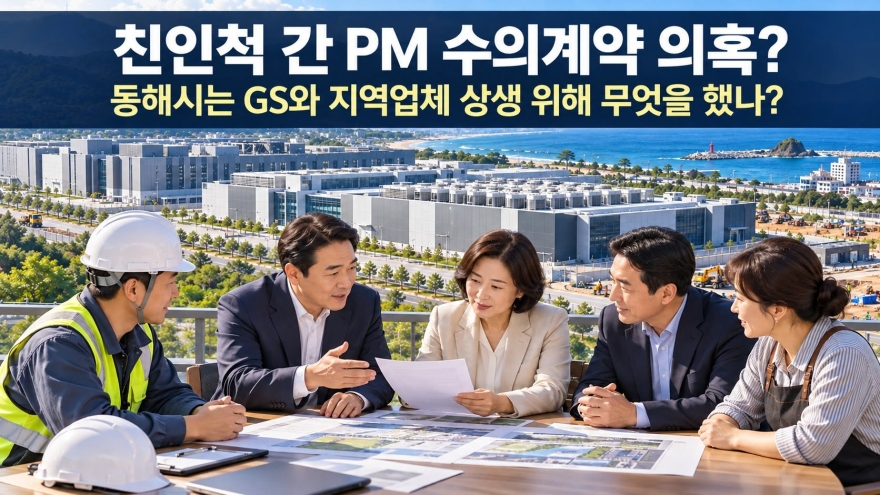
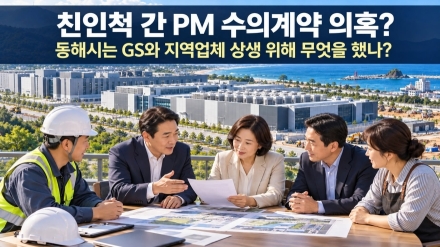
동해 AIDC 지역상생, 특정 업체 추천보다 ‘만남의 장’이 먼저다
요약 | 동해 AI 데이터센터 사업과 관련해 지역업체들이 원하는 것은 특정 업체의 수주 보장이 아니다. 시장이 GS와 지역의 자격 있는 업체 사이에 만남과 정보 공유의 기회를 마련해, 공정한 참여 가능성을 찾도록 돕는 일이다. 관련 계약이 이미 마무리됐다는 제보가 나온 가운데, 착공을 앞두고 동해시는 법정 제... -
동해시 묵호동·시흥시 배곧1동, 주민자치 교류 ‘맞손’
동해시 묵호동이 시흥시 배곧1동 주민자치회와 주민자치 교류 활성화를 위한 자매결연 협약을 체결했다. 사진/묵호동제공 최근 묵호동 행정복지센터에서 열린 협약식에는 양 지역 주민자치 조직과 동장 등 관계자 30여 명이 참석해 뜻깊은 자리를 가졌다. 이번 협약을 통해 양 단체는 ▲지역 대표 축... -
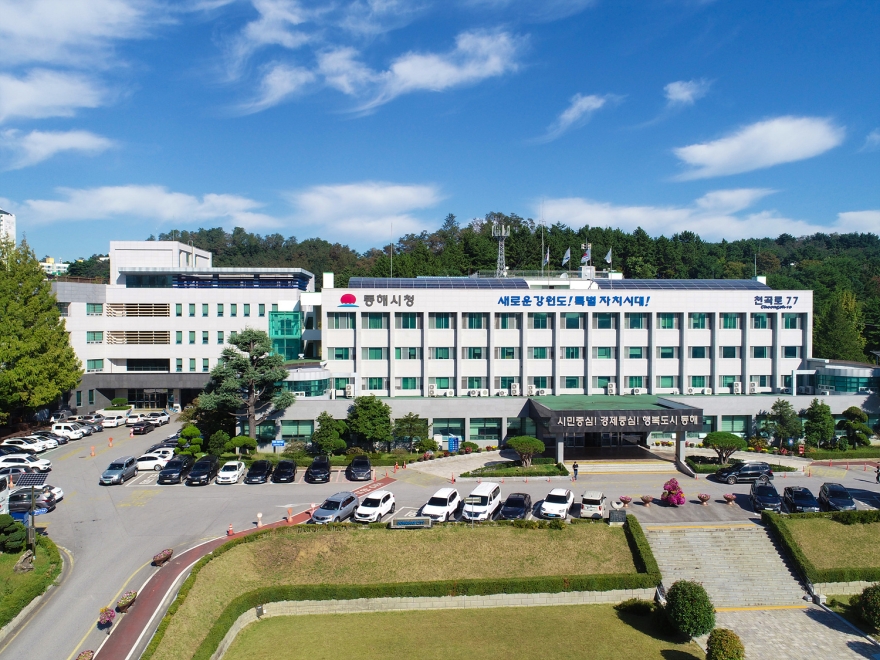
동해시, 2027년 제21기 청소년참여위원회 신규 위원 모집
동해시는 오는 11월 4일부터 20일까지 ‘2027년 제21기 동해시청소년참여위원회’에서 활동할 신규 위원을 모집한다. 「청소년 기본법」에 근거해 운영되는 청소년참여위원회는 청소년들이 지역 정책 수립과 의사결정 과정에 주도적으로 참여해 다양한 의견을 제안하고 자문하는 청소년 참여기구다. 특히 2027년에는 ... -
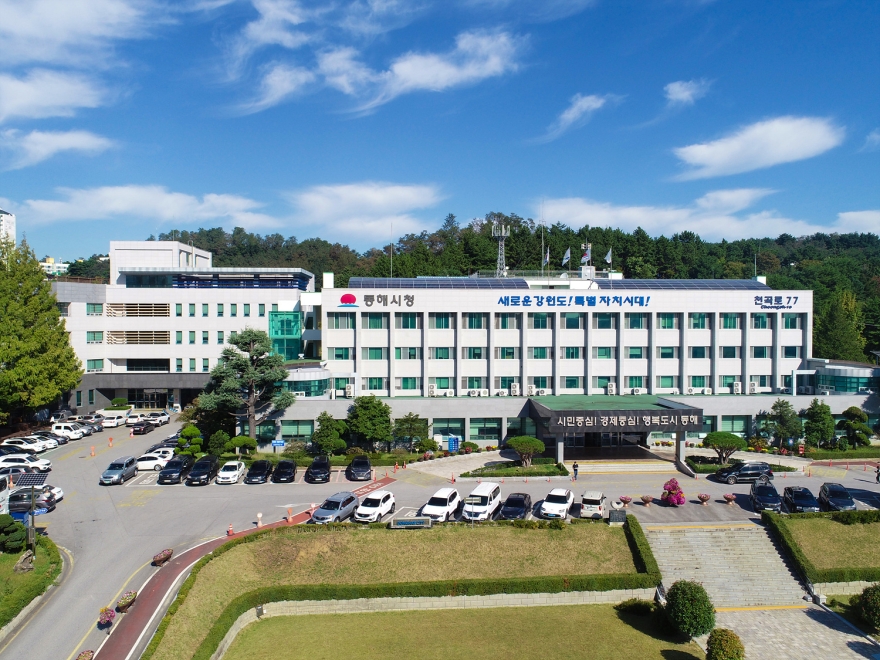
동해시, 고병원성 AI 등 가축전염병 차단 ‘생석회’ 지원 11월 10일까지 신청 접수
동해시가 겨울철 고병원성 조류인플루엔자(AI) 등 가축전염병 유입을 선제적으로 차단하기 위해 ‘방역용 생석회 지원 사업’을 추진하고, 오는 11월 10일까지 신청을 받는다. 최근 주변국에서 고병원성 AI 항원이 검출되고 겨울철새가 도래함에 따라 국내 발생 위험이 커짐에 따라, 시는 축산농가의 철저한 차단 방역을...